
Loomio: Free Open Source Decision-Making Platform for Teams & Communities

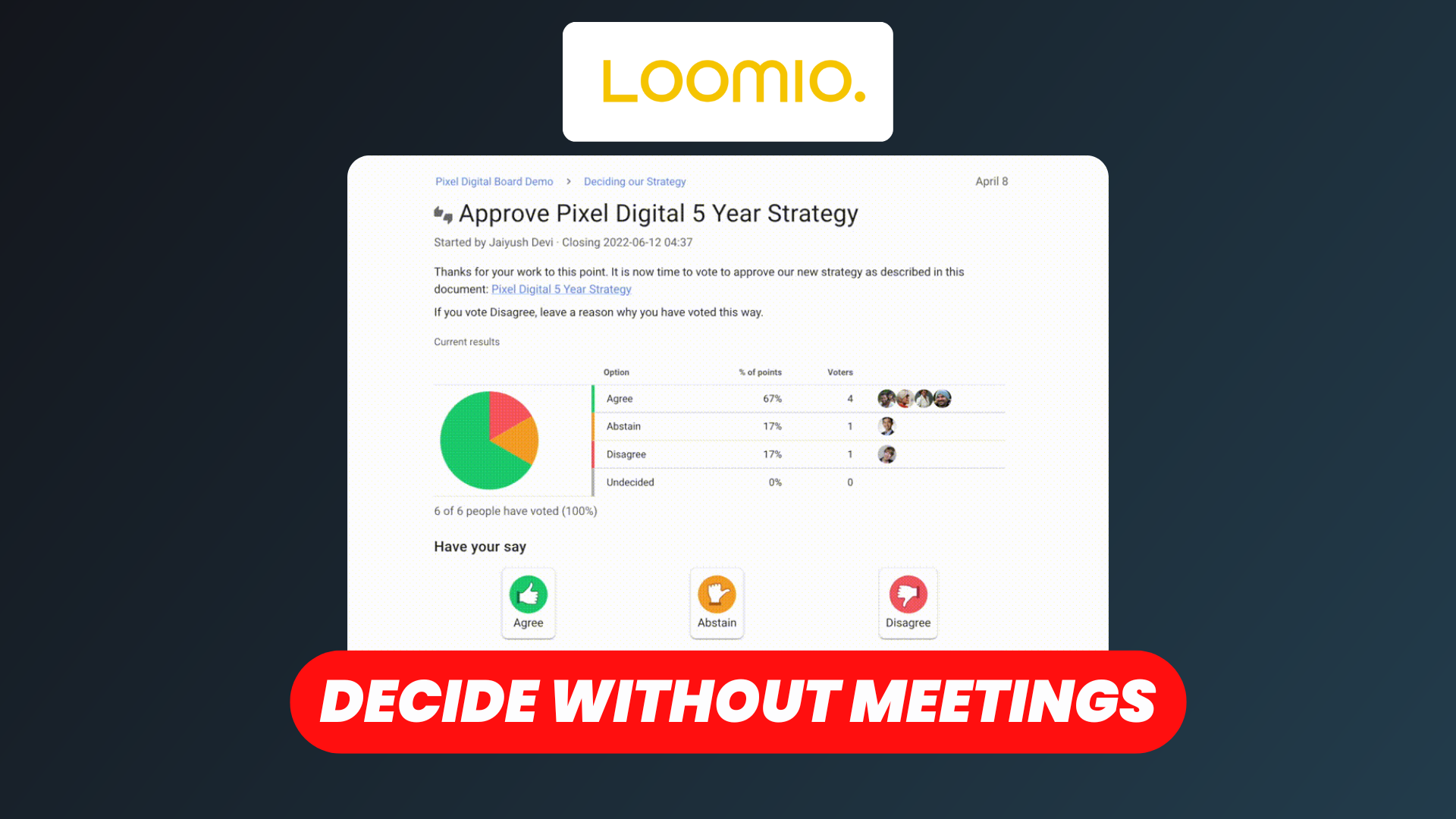
Making decisions as a team isn't always easy, especially when members are working remotely, spread across different time zones, or have different opinions on important topics.
Traditional communication tools like Slack, Microsoft Teams, or email are great for conversations, but they aren't necessarily designed to help groups reach decisions, collect votes, and document outcomes.
That's where Loomio comes in!
Loomio is a free, open-source decision-making platform designed to help teams, organizations, and communities collaborate, discuss ideas, and make collective decisions in a structured and transparent way.
Whether you're managing a business, a nonprofit organization, a cooperative, or an online community, Loomio provides the tools to ensure everyone's voice can be heard.
And since Loomio is open source, you can self-host it and maintain control over your data.
In this article, we'll explore Loomio's main features, including group management, discussions, voting systems, integrations, and its API.
You can also deploy your own Loomio instance with Elestio in just a few clicks, without having to manage the underlying infrastructure.
Watch our dedicated platform overview
Groups
The foundation of Loomio is its Groups system, which provides dedicated collaborative spaces for teams and communities.
Each group acts as a central hub where members can organize discussions, create polls, share information, and track decisions.
When creating a group, you can configure its name, description, privacy settings, and permissions to match your organization's needs.
For example, a company could create separate groups for its management team, product development department, and internal committees.
Loomio also supports subgroups, allowing larger organizations to organize their activities into smaller, focused teams while maintaining a clear structure.
Within each group, members can access ongoing discussions, active polls, shared files, and previous decisions.
This organization makes it easier to keep information accessible and avoid losing important conversations across different communication channels.
Team Members
Once your group is created, the next step is inviting your team members.
Loomio provides membership management features that help administrators control who can participate in discussions and decisions.
You can invite members to join your group, manage their membership, and configure permissions depending on their responsibilities.
For example, administrators can manage group settings, while regular members can participate in discussions and voting according to the group's configuration.
Loomio also includes features such as delegated voting and participation reports, which can be particularly useful for organizations with more formal decision-making processes.
These capabilities make Loomio suitable for everything from small collaborative teams to larger associations and member-driven organizations.
By bringing everyone into the same workspace, Loomio helps create a more inclusive and transparent decision-making environment.
Discussions & Votes
One of Loomio's most important features is its ability to combine structured discussions with collaborative voting.
Instead of making decisions through endless email chains or scattered chat messages, Loomio allows teams to keep everything in one place.
Discussions
Members can create discussions around specific topics, questions, or proposals.
Each discussion provides a dedicated space where participants can share their opinions, ask questions, provide context, and exchange ideas.
Users can add comments, reply to other participants, share relevant documents, and react to messages.
This is especially useful for asynchronous collaboration, as everyone can contribute when they're available rather than having to attend a meeting at the same time.
Discussions also create a searchable history, making it possible to revisit previous conversations and understand how decisions were reached.
Proposals & Voting
When a discussion is ready to move toward a decision, Loomio provides several voting and polling mechanisms.
For example, a team might need to decide whether to launch a new product, approve a budget, or adopt a new internal policy.
Instead of simply asking everyone to reply with their opinion, members can create a formal proposal and invite participants to vote.
Loomio supports different decision-making approaches, including:
- Proposals: Gather support, concerns, and feedback on a specific course of action.
- Consensus: Work toward a decision that participants can collectively support.
- Consent: Identify whether participants have objections that need to be addressed.
- Polls: Collect preferences and compare different options.
- Ranked voting: Allow participants to rank options in order of preference.
- Time polls: Find suitable dates and times for meetings or events.
Depending on the selected voting method, participants can explain the reasoning behind their choices, helping the group understand not only what people think but also why.
Polls can also include settings such as deadlines, anonymity, and quorum requirements.
Once a vote is completed, the results remain associated with the discussion, providing a transparent record of the decision.
This is one of Loomio's biggest advantages over traditional messaging platforms: it doesn't just facilitate conversations; it helps turn them into documented decisions.
Voting Templates
Loomio also provides voting templates to simplify recurring decision-making processes.
Instead of configuring a new poll from scratch every time, teams can reuse predefined configurations suited to their workflows.
For example, an organization might regularly need to approve proposals, gather feedback, or vote on internal policies.
Templates can help standardize how these decisions are presented and conducted.
Loomio supports several polling formats, including Choose, Score, Allocate, Rank, and Time Polls, alongside proposal-based decision processes.
By selecting the appropriate format, teams can adapt their voting process to the type of decision they're making.
This flexibility is particularly valuable for organizations that rely on consensus-based governance, democratic participation, or structured approval workflows.
Chat Integrations
Although Loomio provides its own discussion environment, teams often rely on other communication platforms for their daily conversations.
To help connect these workflows, Loomio supports integrations with popular chat applications, including:
- Slack
- Microsoft Teams
- Discord
- Mattermost
- Matrix
These integrations allow teams to bring Loomio activity into their existing communication channels.
For example, members can receive updates about discussions or polls in the tools they already use, making it easier to stay informed and participate in decisions.
This approach allows organizations to continue using their preferred messaging platforms while relying on Loomio for structured discussions, voting, and decision tracking.
API
For organizations looking to integrate Loomio into their existing infrastructure, the platform also provides an API.
Loomio's documentation includes both User API and Server API resources, offering developers options for connecting the platform with other applications and workflows.
This can be useful for organizations that want to automate certain processes, integrate decision-making into internal tools, or build custom workflows around Loomio.
For example, a development team could explore connecting Loomio with its internal management systems to reduce repetitive administrative tasks.
The API adds flexibility for teams that want to go beyond Loomio's built-in interface and integrations.
Documentation
Loomio provides comprehensive documentation to help users and administrators get started with the platform.
The official documentation covers everything from creating groups and inviting members to managing discussions, configuring polls, and using integrations.
It also includes guides dedicated to different decision-making methods, such as consensus, consent, and advice-based processes.
These resources are particularly useful for organizations that are new to structured collaborative decision-making.
Developers can also explore the API documentation to understand how Loomio can be integrated into other systems.
You can access the official documentation here:
Conclusion
Loomio is a powerful open-source platform for organizations that want to make collaboration more transparent, inclusive, and structured.
By combining groups, discussions, proposals, voting mechanisms, and integrations into a single application, Loomio helps teams move beyond endless conversations and actually reach decisions.
Its flexible voting methods make it suitable for businesses, nonprofits, cooperatives, communities, and other organizations where collective participation matters.
And thanks to its open-source nature, teams can choose to self-host Loomio and maintain greater control over their infrastructure and data.
If you're looking for an alternative to managing important decisions through email, spreadsheets, or chat applications, Loomio is definitely worth exploring.
Want to try Loomio without dealing with installation, server configuration, or maintenance?
With Elestio, you can deploy your own fully managed Loomio instance in just a few clicks, with automated backups, updates, monitoring, and SSL included.
Start exploring Loomio today and give your team a better way to discuss, vote, and make decisions together!