
Matomo: Free Open Source GDPR Analytics Platform

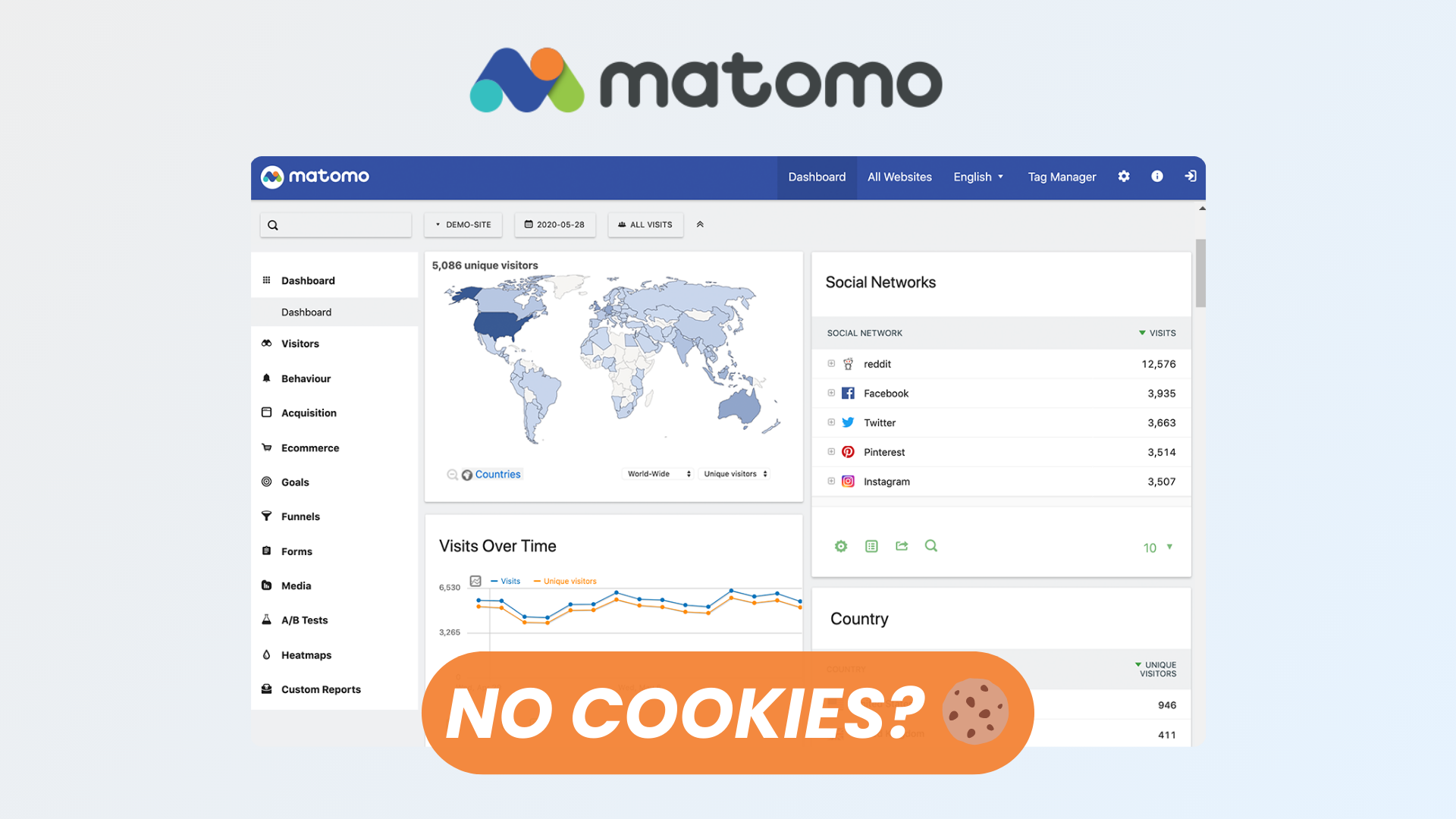
In an era where data privacy is under increasing scrutiny, businesses and developers are rethinking their reliance on traditional web analytics platforms. Matomo stands out as a powerful alternative: a free, open-source analytics platform designed with privacy, data ownership, and regulatory compliance at its core. Unlike proprietary tools that monetize user data, Matomo allows organizations to retain full control over their analytics while remaining compliant with GDPR, ePrivacy, and other global privacy regulations.
This article explores Matomo’s setup, integrations, analytics capabilities, and monetization model to help you determine whether it is the right analytics solution for your organization.
Watch our platform overview on our YouTube channel
Website Setup
When onboarding a new website in Matomo, the setup revolves around creating a project (also referred to as a website or property) within the Matomo interface. This step defines how data will be collected, structured, and reported.
During project creation, users configure essential parameters such as the website name, primary URL, time zone, and industry category. These settings ensure accurate reporting, correct attribution of visits, and proper alignment with business context from the start.
Once the project is created, Matomo generates a unique tracking ID and JavaScript snippet associated with that website. This snippet is what links user activity to the project and enables data collection. For common CMS platforms like WordPress, official plugins automate this step by connecting the project directly to the site without manual code insertion.
Matomo’s onboarding flow also guides users through optional but important configuration steps, including consent management, cookie behavior, IP anonymization, and exclusion of internal traffic. This allows organizations to align their analytics setup with privacy requirements and internal reporting standards before any data is collected.
Overall, Matomo’s project-based onboarding ensures that analytics are correctly structured from day one, reducing the need for later reconfiguration while maintaining a strong privacy-first foundation.
SDK Integrations
Beyond standard web tracking, Matomo provides SDKs and integrations for a wide range of platforms and environments:
- Mobile SDKs for iOS, Android, Flutter, React Native, and Xamarin
- Backend and framework integrations including PHP, Java, Python, Node.js, and .NET
- Tag Manager (open source) for managing analytics and marketing tags without third-party dependencies
These SDKs enable consistent tracking across websites, mobile applications, and hybrid environments, making Matomo suitable for multi-platform products and SaaS applications.
Analytics Dashboard
Matomo’s analytics dashboard is highly customizable and designed for clarity rather than vanity metrics. Users can create dashboards tailored to specific roles, such as marketing, product, or executive reporting.
Key characteristics of the dashboard include:
- Real-time visitor monitoring
- Custom widgets and layouts
- Segmentation by device, location, traffic source, or behavior
- Exportable reports in multiple formats
The interface is intuitive for non-technical users while still offering depth for analysts who require granular insights.
Analytics Features
Matomo delivers a comprehensive feature set comparable to, and in some cases exceeding, mainstream analytics platforms:
- Page views, sessions, and unique visitors
- Traffic source and campaign tracking
- Event tracking and custom dimensions
- Heatmaps and session recordings (optional)
- User flow and behavior analysis
- Site search analytics
Crucially, Matomo allows configuration for cookie-less tracking, IP anonymization, and consent-based data collection, making it suitable for privacy-sensitive environments.
Goal Conversion Tracking
Matomo’s goal tracking system enables businesses to measure outcomes rather than just traffic. Goals can be defined for actions such as:
- Form submissions
- Account registrations
- Purchases or checkout completions
- Time spent on specific pages
Goals can be combined with funnels and segmentation to analyze conversion rates across traffic sources, devices, and user types. For e-commerce, Matomo includes native support for product views, carts, orders, and revenue tracking.
Paid Features & Marketplace
While Matomo’s core platform is free and open source, additional functionality is available through its Marketplace and cloud plans. Paid plugins include:
- Advanced heatmaps and session recordings
- A/B testing
- Roll-up reporting across multiple websites
- Media analytics and advanced funnels
- User journey analysis
This modular pricing model allows organizations to pay only for features they need, while still benefiting from a fully functional free core.
Conclusion
Matomo is a compelling analytics platform for organizations that value privacy, transparency, and data ownership. Its open-source foundation, GDPR-friendly design, and extensive feature set make it a strong alternative to proprietary analytics solutions. Whether self-hosted for maximum control or deployed via Matomo Cloud for convenience, it offers flexibility without compromising compliance.
For businesses operating in regulated markets, privacy-first products, or regions with strict data protection laws, Matomo is not just an alternative—it is often the more responsible choice.