
NATS: Free Open Source Messaging System for Distributed Apps

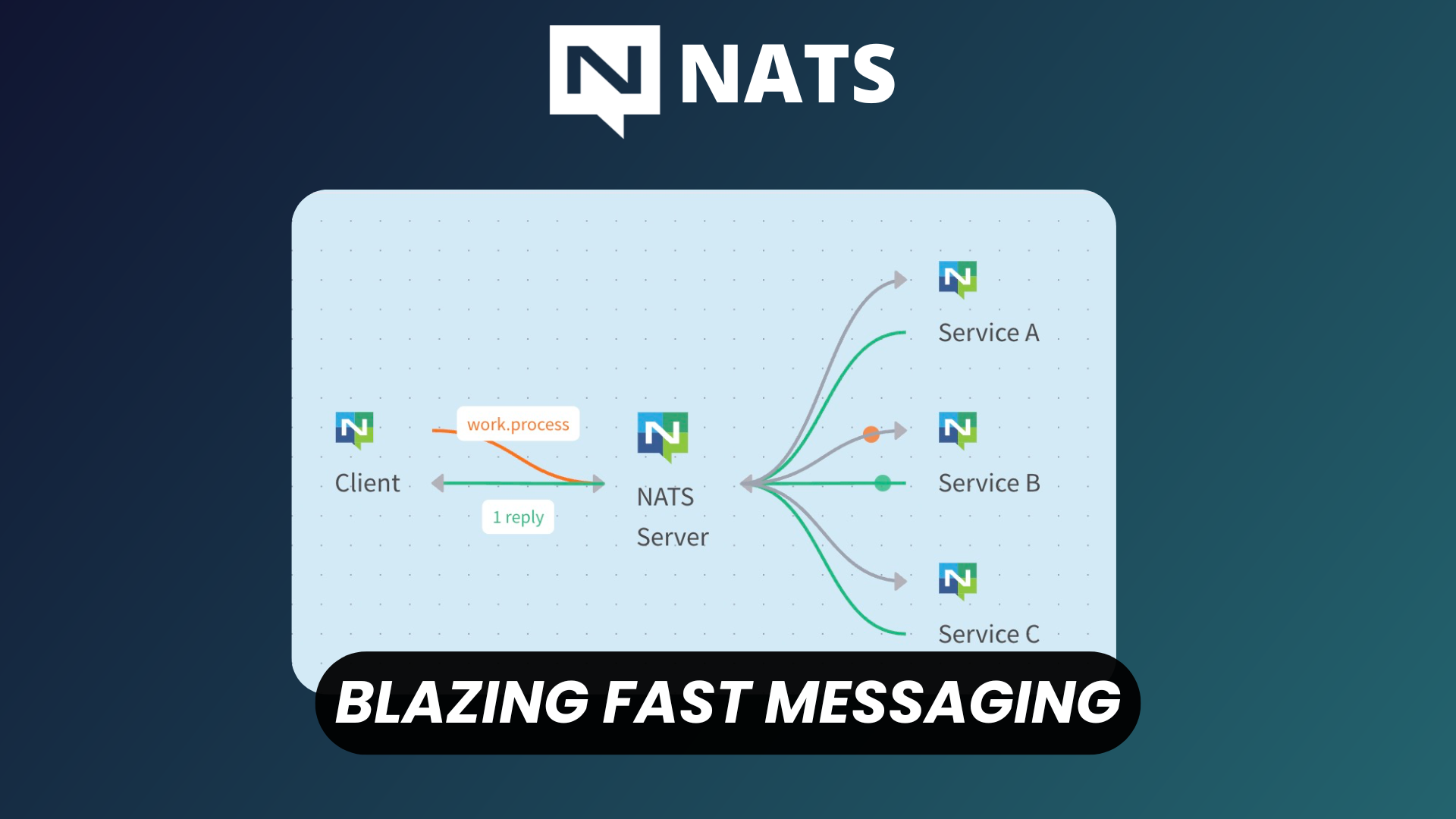
Modern distributed systems require fast, reliable, and scalable communication between services. As architectures evolve toward microservices, event driven systems, and cloud native deployments, traditional communication patterns often become bottlenecks.
NATS is a free, open source messaging system designed to address these challenges. It provides lightweight, high performance communication with a simple protocol and minimal operational overhead. Unlike heavier brokers, NATS focuses on speed, simplicity, and developer productivity, making it a strong choice for real time systems and distributed applications.
At its core, NATS enables services to communicate through publish subscribe and request reply patterns, while also offering persistence and streaming capabilities through JetStream.
Watch our platform overview on YouTube
Monitoring Dashboard
Operating a distributed system without visibility is risky. NATS provides built in monitoring endpoints that expose detailed runtime information about the server.
By enabling the monitoring port, you can access endpoints such as:
/varzfor server statistics/connzfor connection details/routezfor cluster routing/subszfor subscription insights
These endpoints return JSON data, making them easy to integrate with observability stacks like Prometheus and Grafana.
Additionally, tools such as the NATS CLI and third party dashboards allow you to visualize metrics like message throughput, latency, and connection counts. This makes it straightforward to detect bottlenecks, monitor system health, and troubleshoot issues in real time.
Messaging System
NATS is built around a subject based messaging model. Instead of queues or topics in the traditional sense, messages are published to subjects, which are simple strings that can be hierarchical.
Example subjects:
orders.createduser.loginpayments.usd.completed
Subscribers listen to specific subjects or use wildcards to capture multiple streams of data.
Key characteristics of the NATS messaging system:
- High throughput and low latency
- At most once delivery by default
- Horizontal scalability through clustering
- Lightweight protocol with minimal overhead
This design makes NATS especially suitable for systems that need fast, fire and forget communication between services.
NATS Clients
NATS provides official client libraries for many programming languages, including:
- Go
- JavaScript and TypeScript
- Python
- Java
- Rust
- C#
All clients follow similar patterns, making it easy to switch languages or maintain consistency across services.
A typical client workflow includes:
- Connecting to a NATS server
- Subscribing to one or more subjects
- Publishing messages
- Handling responses or processing events
The simplicity of the client APIs is one of NATS strongest advantages. You can build a working messaging flow with just a few lines of code.
Simple Pub Sub
The publish subscribe model is the foundation of NATS.
In this pattern:
- A publisher sends a message to a subject
- One or more subscribers receive the message if they are listening on that subject
Example flow:
- Service A publishes to
orders.created - Service B and Service C subscribe to
orders.created - Both services receive the message independently
This enables loose coupling between services. Publishers do not need to know who consumes the data, and subscribers can be added or removed without impacting the publisher.
Pub sub is ideal for event driven architectures, logging pipelines, and real time notifications.
Request Reply (RPC)
While pub sub is useful for asynchronous communication, many systems also need synchronous interactions. NATS supports this through the request reply pattern.
In this model:
- A client sends a request to a subject
- A responder listens on that subject and sends back a reply
- The client waits for the response, similar to an RPC call
Example use cases:
- Fetching user data from a service
- Performing validation checks
- Triggering computations that require immediate results
NATS handles the reply routing automatically using inbox subjects, so developers do not need to manage correlation IDs manually.
This pattern allows you to build lightweight RPC systems without introducing heavy frameworks.
JetStream
JetStream extends NATS with persistence, streaming, and advanced messaging features.
Core capabilities include:
- Message durability with storage
- At least once delivery guarantees
- Stream replay and time travel
- Consumer state tracking
- Flow control and rate limiting
With JetStream, you can define streams that store messages for specific subjects, and consumers that process those messages at their own pace.
Example scenarios:
- Event sourcing systems
- Data pipelines
- Reliable job queues
- Audit logging
JetStream transforms NATS from a simple messaging system into a full featured streaming platform while maintaining its lightweight nature.
Conclusion
NATS offers a compelling combination of simplicity, performance, and flexibility for distributed applications. Its lightweight design makes it easy to adopt, while its advanced features such as request reply and JetStream enable more complex architectures when needed.
Whether you are building microservices, real time systems, or event driven platforms, NATS provides the tools to handle communication efficiently without unnecessary complexity.
For teams looking to balance speed, scalability, and operational simplicity, NATS is a strong and practical choice.