
SCALE 23x Takeaways: What North America's Biggest Open-Source Conference Tells Us About Self-Hosting in 2026

If you want to understand where self-hosting is headed, skip the analyst reports. Go to Pasadena.
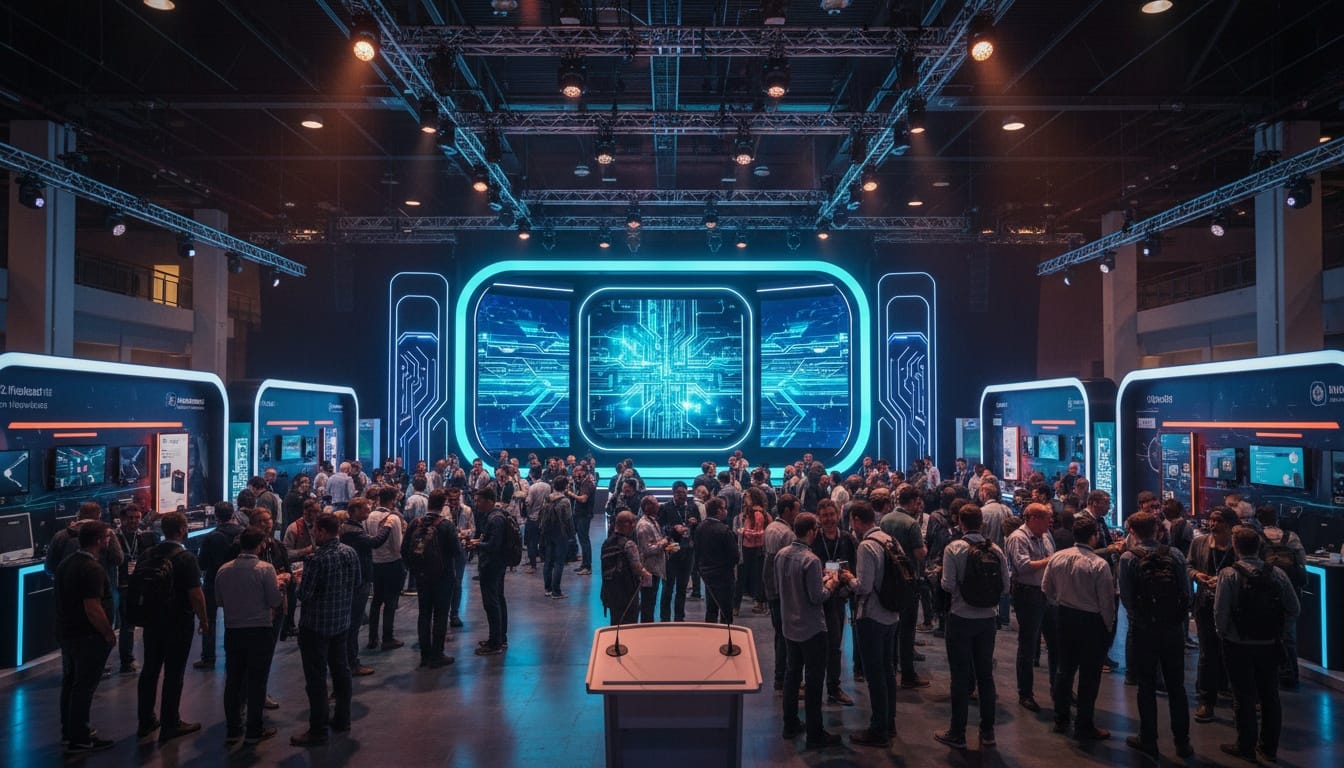
SCALE 23x, North America's largest community-run open-source conference, is happening right now (March 5-8, 2026) at the Pasadena Convention Center. Over 3,500 attendees, 120+ exhibitors, and 16 co-located events are packed into four days. And this year, the message from stage after stage is unmistakable: the self-hosting movement isn't a niche anymore. It's the mainstream.
Here's what caught our attention.
"Owner, Not Renters"
The line that keeps echoing through the hallways comes from Raffi Krikorian, Mozilla's CTO, speaking at the KwaAI Personal AI Summit (one of SCALE's co-located events). His argument: AI tools should be "transparent, open, and owned by the people who use them, not rented from corporations."
That's not a homelab enthusiast talking. That's Mozilla's top technologist.
And he's not alone. Dr. Ben Goertzel, founder of SingularityNET, laid out his vision for decentralized AI networks. Drummond Reed presented on self-sovereign identity and decentralized trust. The message is consistent: the future of AI isn't a subscription to someone else's model. It's running your own.
AI Comes to the Homelab
Three full days of SCALE 23x are dedicated to Open Source AI content. That's not a side track. That's nearly the entire conference.
The talks reflect what self-hosters have been discovering all year. "Agentic Workloads on Linux," presented at the Fedora Hatch event, explores using Btrfs subvolumes for secure AI agent deployment. Translation: people are running AI agents on their own hardware, and they need better isolation tools.
Between Ollama making local LLMs trivial to run, LibreChat providing a self-hosted ChatGPT-like interface, and tools like Dify and FlowiseAI enabling no-code AI workflows, 2026 is the year self-hosted AI stops being experimental and starts being practical. If you want to try it yourself, Elestio offers one-click deployment for Ollama, LibreChat, and FlowiseAI.
The Vendor Lock-In Backlash Is Real
One of the most anticipated talks is Peter Farkas's "Enterprises Play Dirty," where the Percona CEO explains how major vendors like Red Hat and MongoDB adopt tactics to protect market power and restrict user freedom.
The sponsor list tells the same story. Valkey, the community-driven Redis fork born after Redis changed its license in 2024, is a gold sponsor. So is VictoriaMetrics, the open-source Prometheus alternative. These aren't scrappy side projects. They're production-grade tools that exist because companies decided to lock users out.
Self-hosters have always understood this risk intuitively. What's new in 2026 is that the enterprise world is catching up. When a database company's CEO devotes a conference talk to vendor manipulation tactics, you know the conversation has shifted.
DevOps Meets AI (and Self-Hosting Benefits)
DevOpsDay LA, celebrating its 15th event, picked a telling theme: "DevOps in an AI World." The focus isn't on replacing ops teams with AI. It's about how teams adapt their workflows as AI becomes embedded in every tool they use.
For self-hosters, this matters because the same DevOps principles that drive enterprise infrastructure (containers, observability, CI/CD) are exactly what make modern self-hosting possible. Cloud Native Days LA runs two full days of Kubernetes, Docker, ArgoCD, and Prometheus content. These aren't abstract enterprise technologies anymore. They're what people use to run Nextcloud and Jellyfin on a mini PC in their closet.
The Numbers Don't Lie
SCALE has been running for 23 years, starting as a small Linux users group gathering in the late 1990s. The growth trajectory tells its own story:
| Metric | SCALE 23x (2026) |
|---|---|
| Attendees | ~3,500 |
| Co-located events | 16+ |
| Exhibiting organizations | 120+ |
| Conference days | 4 |
| Full pass price | $80 |
Compare that $80 full-access pass with KubeCon ($1,000+) or most corporate tech conferences ($500+). SCALE proves that open-source conferences can scale without selling out.
The FOSS@Home track, dedicated entirely to personal open-source projects, deserves special mention. Having a first-class track for homelab and self-hosting projects at North America's largest community-run conference means self-hosting isn't a sidebar. It's center stage.
What This Means for You
Three trends from SCALE 23x are worth watching:
Self-hosted AI is production-ready. The tools exist, the community is building on them, and Mozilla's CTO is publicly championing the approach.
Open-source forks are thriving. Valkey, VictoriaMetrics, and others prove that when vendors restrict freedom, the community builds alternatives. Your self-hosted stack has more truly open options than ever.
The tooling gap is closing. With mature container orchestration, observability platforms, and managed deployment options, running your own infrastructure no longer requires a dedicated ops team.
If SCALE 23x proves anything, it's that self-hosting in 2026 isn't about ideology. It's about practicality. The tools are better, the community is bigger, and the reasons to own your stack have never been stronger.
Thanks for reading. See you in the next one.